Gut health app designed for people living with IBD, helping them track symptoms, identify patterns, and better understand their condition. The idea is rooted in my own lived experience with IBD and the gaps I’ve faced in managing it day to day.
Releaf
CASE STUDY
In Progress
Releaf
🌿
Role
Timeline
Team
Founder
Nov 2025 - Present
Solo Project
Living with Inflammatory Bowel Disease means navigating a world of unpredictable symptoms, food triggers, medication schedules, and emotional toll. Most health tracking apps treat this data like spreadsheets, cold, clinical, and overwhelming.
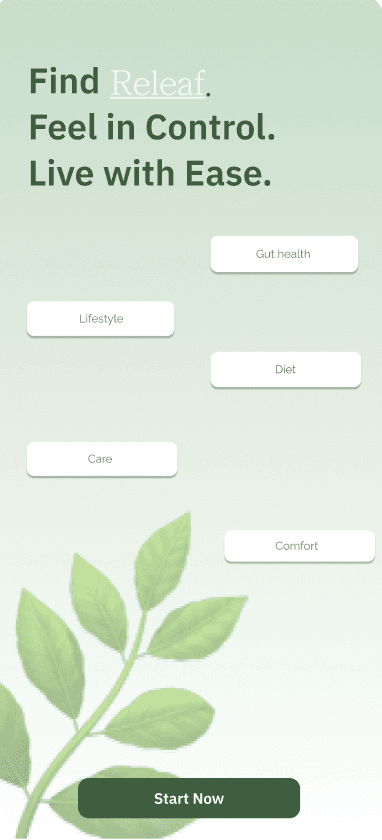
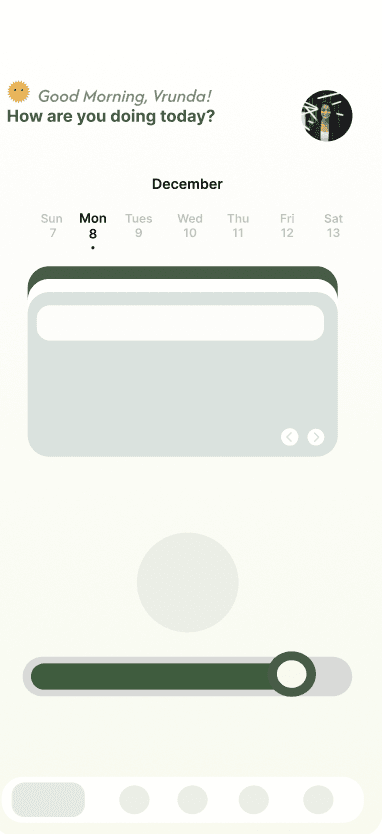
Releaf reimagines health tracking as a conversation. Instead of filling out forms, you talk to an AI companion that listens, learns your patterns, and surfaces insights in a calm, non-overwhelming way.
Problem
Secondary Market Research
Understanding
Our Goal
Data-Driven
Strategy
The Problem:
Managing IBD is already exhausting on its own, and keeping track of everything that affects it can feel like an extra full-time job. Between symptoms, meals, stress levels, sleep, and medications, there’s so much to record — and on days when you're not feeling well, the last thing you want to do is fill out long forms or dig through scattered notes. For someone like me, it becomes mentally draining and easy to fall behind, which makes it even harder to understand what’s helping or triggering a flare-up.
The Goal:
I wanted to make tracking feel less like a chore and more like something that genuinely supports you. The aim is to build an AI companion that gently guides you, checks in with you, and helps connect the dots without overwhelming you. Instead of rigid logging, it becomes a conversation — a way for IBD patients to feel understood, supported, and more in control of their health, even when everything else feels uncertain.
Follow Along to discover My Story
How I find Releaf
